Introduction:
Migrating from a limited hosting environment to scalable cloud infrastructure to improve reliability, performance, and operational visibility.
Client Environement:
Industry: Business Website / Digital Platform
Infrastructure Type: Linux-based web application environment
Deployment Model: Cloud-hosted infrastructure
Focus Areas:
• Scalability
• Performance
• Operational visibility
• Reliability
Client Challenge:
The existing hosting environment was unable to efficiently support growing operational and performance requirements. The infrastructure faced multiple limitations, including inconsistent performance, limited scalability, and lack of operational visibility.
Key challenges included:
• Frequent performance degradation during higher traffic periods
• Limited control over infrastructure configuration and optimization
• Absence of centralized monitoring and alerting
• No structured backup and recovery process
• Operational risks associated with traditional shared hosting environments
Solution Overview:
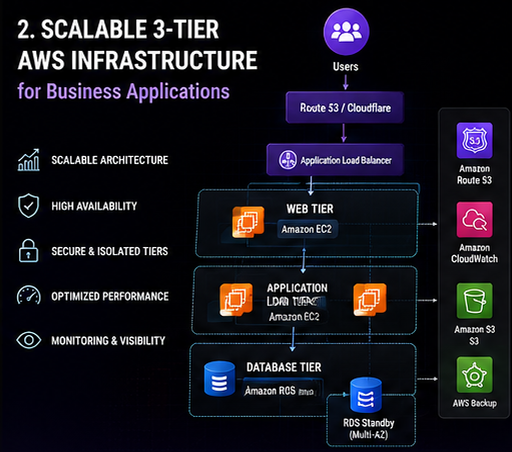
To address these infrastructure limitations, a cloud-based deployment model was designed and implemented with a focus on scalability, reliability, and operational control.
The solution included:
• Migration from shared hosting to cloud infrastructure
• Optimized Linux-based web server configuration
• Separation of application and database workloads
• Backup and recovery implementation
• Monitoring and infrastructure visibility improvements
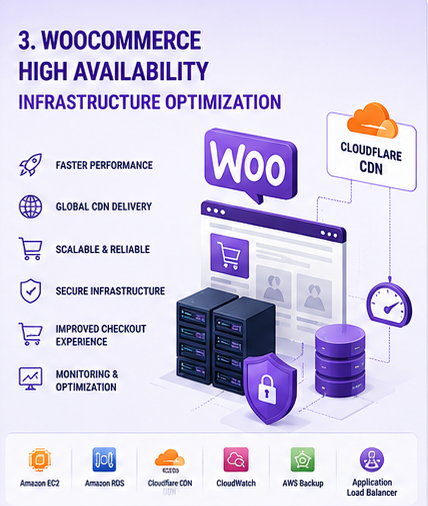
• Performance optimization and caching enhancements
The architecture was designed to provide a stable and scalable foundation capable of supporting future application growth.
Architecture Overview:
The cloud architecture separates infrastructure layers to improve scalability, operational visibility, reliability, and application performance.
Technologies used:
• Cloud VM Infrastructure
• Linux Server Environment
• Nginx / Apache Web Server
• MySQL Database
• Cloudflare CDN & Security
• Monitoring & Backup Solutions
Implementation Approch:
The migration and modernization process was executed using a phased implementation approach to minimize operational risk and ensure service continuity.
Implementation activities included:
• Infrastructure assessment and planning
• Backup validation prior to migration
• Deployment of cloud server environment
• Web server and database optimization
• Controlled migration and DNS transition
• Monitoring and backup configuration
• Post-migration validation and performance testing
Rollback and recovery planning were incorporated throughout the implementation process to ensure migration stability.
Result & Impact:
The migration delivered measurable improvements in infrastructure reliability, operational visibility, and website performance.
 Zero-downtime migration with no service disruption
Stable and reliable infrastructure for consistent performance
Improved website responsiveness and user experience
Better control over infrastructure and deployment
Reduced operational risks with monitoring and backups
Scalable environment ready for future growth
Business Impact:
The new infrastructure provided a more stable and scalable operational foundation capable of supporting future business growth.
Improved reliability and performance contributed to a better user experience, while enhanced operational visibility reduced infrastructure management risks and improved maintainability.